SOC 2 Type II Automated Evidence Collection for Growing SaaS Companies
Automated evidence collection lets growing SaaS companies hit SOC 2 Type II without manual chaos.
SOC 2 Type II is a compliance framework, but for a growing SaaS company it functions as a sales requirement first. The core challenge was never learning what the AICPA standard says. It's keeping a months-long stream of auditor-ready proof flowing without pulling the engineering team off the roadmap.
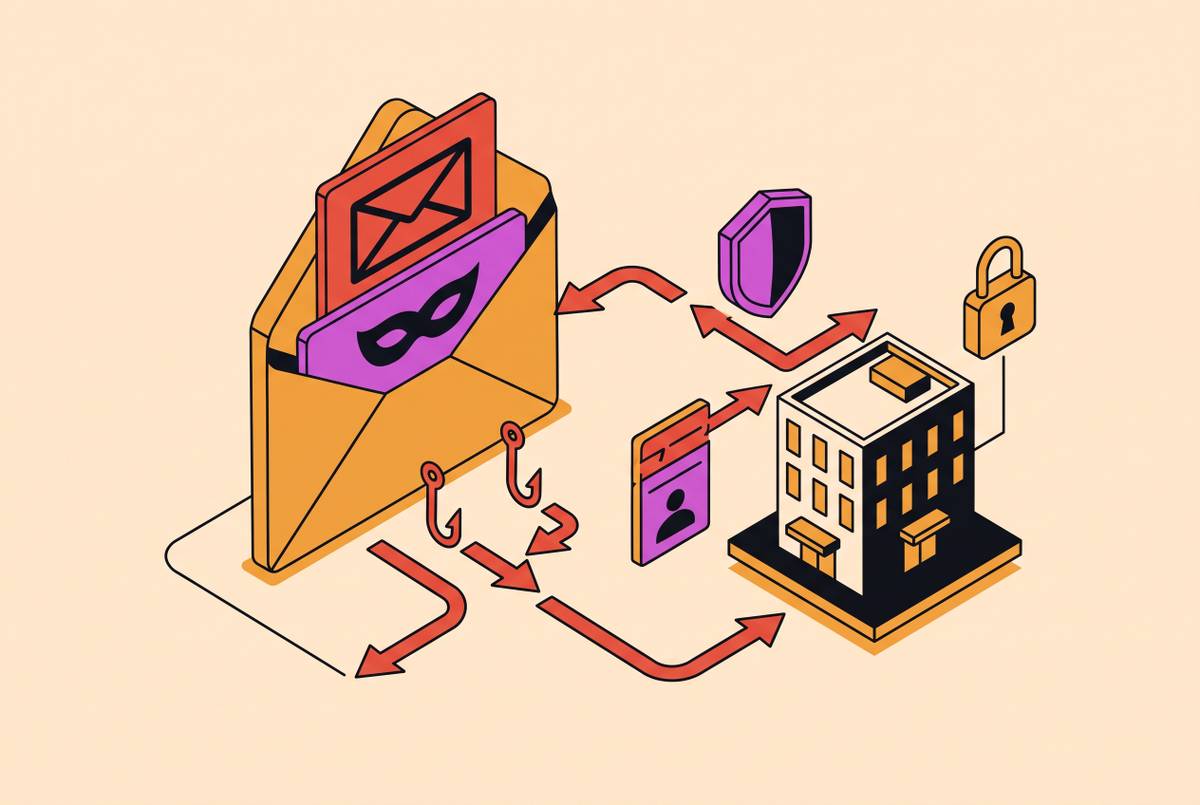
SOC 2 is technically voluntary. AICPA doesn't force anyone to get audited. But that word "voluntary" hides what actually happens in an enterprise deal cycle: a missing report can knock a vendor out before procurement even opens the file, according to Konfirmity's guide, which cites Plante Moran on this point. One SaaS startup found this out the hard way in 2023, losing a $400,000 enterprise contract because a security review came down to a single unanswered question: where's your SOC 2 report?
The checkbox prompts buyers to ask something more specific. They want to know how a vendor keeps one customer's data walled off from another's in a multi-tenant system, what happens when something breaks during an outage, and how access gets controlled and vendors get monitored. Those aren't audit questions. They're operational ones, and SOC 2 is just the paperwork that answers them in a format procurement teams trust.
That's also why SOC 2 doesn't belong to the security team alone. It sits across vendor risk management, sales enablement, and regulatory compliance all at once, which makes it a revenue function as much as a security one. breach cost at $10.22 million, driven largely by regulatory fines and slow detection, a figure Konfirmity's guide cites directly. Enterprise buyers are managing that exposure by screening it out at the vendor stage, before it ever becomes their problem. Per that same guide, most now ask for assurance artifacts early in the procurement cycle, which means deals can stall even when a team believes its paperwork is in order.
Once that business case lands, a harder question follows: which report actually clears the bar with enterprise buyers, and why does Type II keep coming up as the answer?
What makes Type II structurally harder than Type I
A Type I report is a snapshot. An auditor looks at a single date and confirms the controls are designed and, in fact, implemented as of that day. Companies can pull this off in a matter of weeks. Most enterprise buyers require Type II specifically, according to Strac's guide, which makes Type I something closer to a warm-up lap than a finish line.
There's no way to shortcut the wait. The observation period is baked into the AICPA standard itself, and no amount of automation, staffing, or urgency changes the calendar. That's the part founders tend to underestimate: this isn't a documentation problem that a good week of work solves. It's a duration problem.
What "operating effectiveness" means, in plain terms, is that a control has to hold up the entire time, not just at the bookends of the window. Auditors sample across the full period. They'll check new hires for background checks and proper access provisioning, check departed employees for how fast their access got pulled, and check endpoints for patching and configuration status. That's a strict standard, and it's an unforgiving one for any team relying on manual habits instead of built-in enforcement.
Layered on top of that timing requirement are the five Trust Services Criteria: Security, which is mandatory for every SOC 2 audit, plus Availability, Processing Integrity, Confidentiality, and Privacy, which get selected based on what a company builds and what data it touches. Whatever criteria a company scopes in, they all need evidence spanning the entire window, and most SaaS companies land on Security and Availability at minimum. So the real difficulty isn't grasping the framework's rules. It's producing continuous, timestamped proof that every in-scope control ran correctly, month over month, across every system that touches customer data.
That evidence requirement is exactly where growing SaaS teams hit a wall, and the manual version of this process tends to collapse under its own weight. A control that existed but wasn't enforced for two months in the middle of the window fails.
Manual evidence collection breakdown at scale and over time
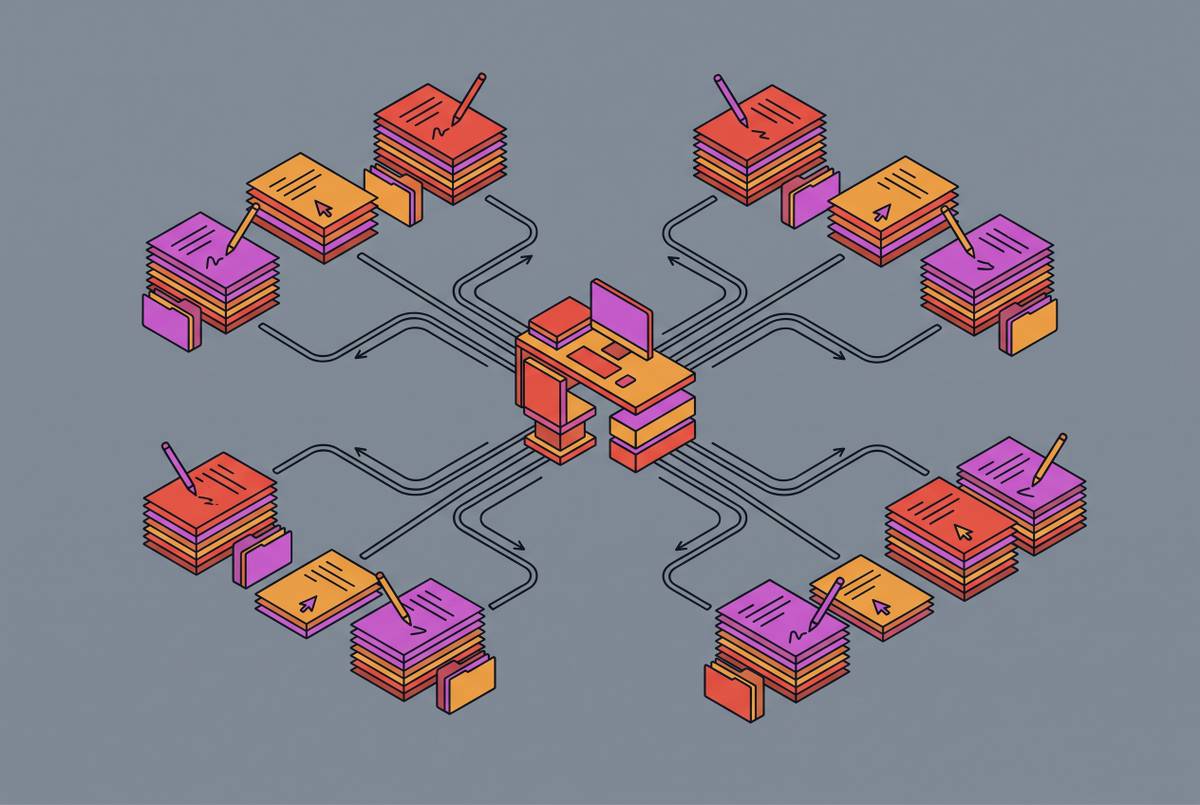
Picture the manual version of evidence collection: someone combing through server logs, taking screenshots of admin panels, exporting spreadsheets from five different systems, then reconciling all of it by hand, week after week, for months. It's slow, it's repetitive, and it's the kind of work nobody signed up to do when they joined a fast-growing SaaS company.
The failures appear in predictable places. Teams scramble to gather evidence right before the audit closes instead of capturing it as it happens, and auditors can usually tell the difference between a lived-in record and one assembled the week before the deadline. Cloud environments also drift. A control that was correctly configured in month one can quietly slip by month four, and a manual process has almost no way to catch that kind of change in real time. Identity and access management is its own trap: provisioning and deprovisioning events happen constantly and quietly, and auditors specifically sample terminated-employee access revocation, which is exactly the kind of high-frequency event that's easy to lose in a spreadsheet.
Security monitoring data makes the problem worse. SIEM output and log aggregation platforms generate volumes of data that are simply hard to translate into something an auditor can read and trust without a system doing that translation automatically. Screenshots gathered in a rush aren't the same evidentiary weight as timestamped records tied to a specific control, generated the moment that control ran.
A GRC tool built to attest that a policy exists is not the same thing as a system that proves the policy actually worked. That distinction is where manual evidence collection fails most visibly, because collecting proof that something exists is a much lower bar than proving it operated correctly for six straight months.
None of this comes cheap, either. What automation actually replaces isn't the effort of the work. The underlying mismatch is between a process built for a single point in time and a standard that demands continuous proof. Manual gaps increase consulting costs to fill them and weaken control visibility, and per the research, traditional SOC 2 costs $50,000–$100,000 in consulting fees when done without automation.
The scope of automated evidence collection
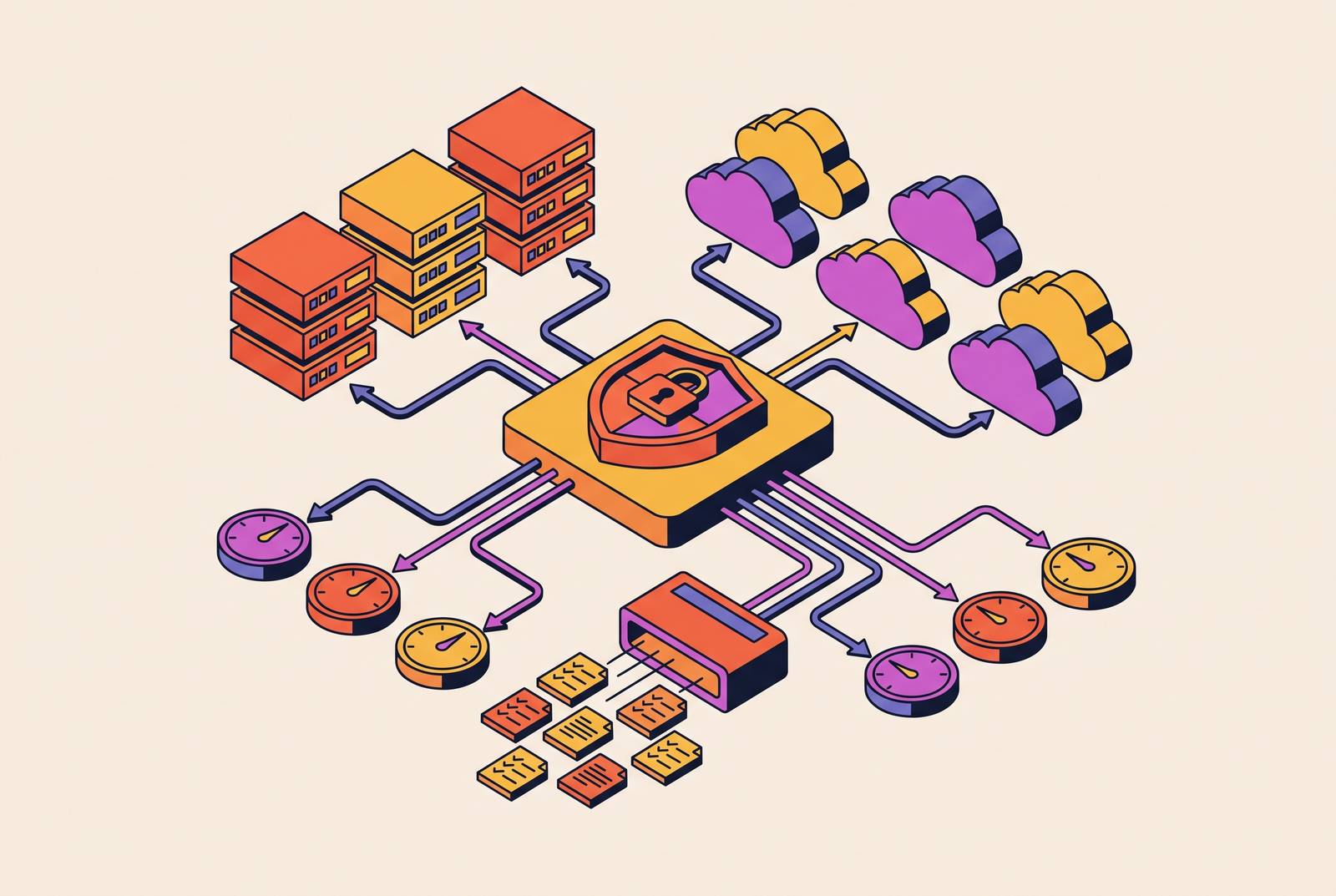
Automated evidence collection works by connecting directly into the tools a company already runs, cloud infrastructure, identity providers, version control, ticketing systems, and pulling evidence out of them on an ongoing basis, storing it as timestamped records mapped to specific controls.
"Continuous" here has a precise meaning. Evidence gets collected as the observation window unfolds, not stitched together after the fact. Drift gets flagged when it happens, whether that's a misconfigured setting, a deprovisioning step that got missed, or an access review that slipped past its deadline, so the auditor never has to be the one who finds it. Audit-ready reporting no longer requires a sprint; instead, it becomes an exhaust product, because it just falls out of the normal operation of the system.
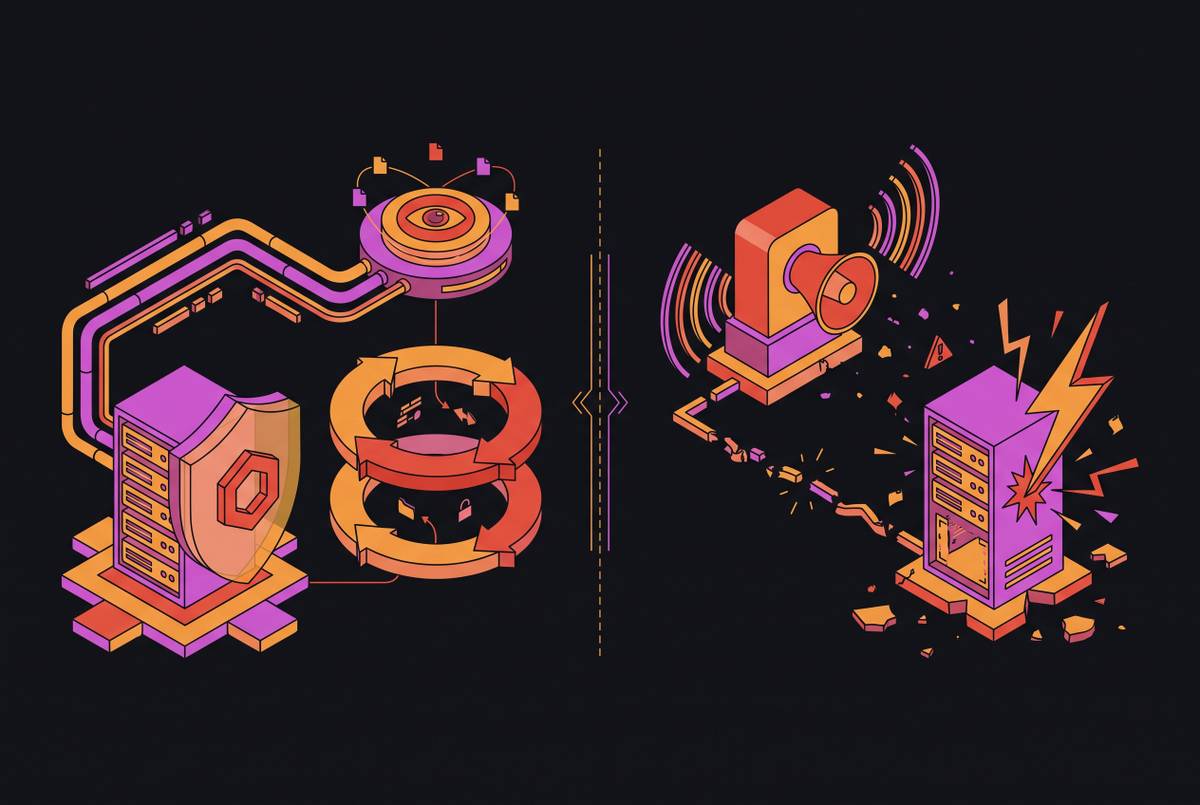
Automation has real limits, and they include this. It cannot shrink the mandatory observation window, it cannot stand in for an auditor's judgment, and it cannot turn a badly designed control into a good one just because the documentation looks clean. A well-documented broken control is still broken.
A sharper distinction drives all of this, and it's the one buyers most often miss: proving a control exists is not the same as proving it stops anything. Evidence-only platforms are built for the first job, not the second. Strac's 2026 guide points out that the 2022 update to the Trust Services Criteria refreshed the points of focus to account for newer technology and threats, but it didn't touch the underlying criteria or change what auditors are responsible for testing, which means this gap between "documented" and "enforced" has only gotten wider, not narrower.
So what should a buyer actually be checking for? Continuous, automated evidence pulled straight from cloud, HR, identity, and code systems, without someone manually exporting anything. Controls that are pre-mapped to the Trust Services Criteria, so nobody's reverse-engineering which control satisfies which requirement. Real-time flags when something drifts, rather than a pile of findings at the end. Streamlined user access reviews with tracking and approvals built in. Centralized vendor risk scoring. And ideally, controls that map across frameworks, so a control built for SOC 2 also counts toward ISO 27001, HIPAA, or GDPR instead of duplicating the same work.
Integration depth is the tell here, more than any marketing claim. A platform that connects directly into AWS, Azure, GitHub, GitLab, Okta, Jira, and Google Workspace is collecting evidence without a human in the loop, and any gap in that integration list is a gap in the evidence record itself. The category splits along exactly this line while comparing platforms.
Six SOC 2 compliance automation platforms compared on the dimensions that matter for Type II
Strac's 2026 guide frames the market as two distinct groups: evidence-only platforms and evidence-plus-active-security platforms, and understanding which layer a company is actually buying matters more than any single feature comparison.
Strac Comply sits in the evidence-plus-active-security camp. It bundles DLP, DSPM, SSPM, and OAuth governance directly into the compliance layer, rather than handing that job off to a separate vendor. The distinguishing detail, per Strac's own guide, is that the DLP producing CC6.x data-protection evidence runs inside the platform itself, instead of being sourced from a partner. Pricing starts at $9,500 a year, which makes it a fit for teams that want the audit layer and the underlying security enforcement in one place, rather than stitched together from two vendors.
Secureframe is evidence-only, partnering with outside DLP vendors for active security. It offers 200 native integrations plus an API for evidence collection, and its market recognition is substantial: fourth on G2's Best Governance, Risk & Compliance Products list for 2026, a spot on Forbes' America's Best Startup Employers list for 2025, and the Hot Company Compliance Automation award at the 2025 Global InfoSec Awards. Pricing starts at $10,000 a year, with Fundamentals, Complete, and Defense tiers available depending on how deep a company needs to go. It's a strong pick for SMBs that want broad integration coverage paired with guided support.
Pricing is custom, available through a demo, and it suits companies from early-stage through mid-market that want expert access sitting right alongside the automation. It is best for first-time SOC 2 teams that want white-glove guidance alongside automation.
Scytale leans hard into expert-guided onboarding while still being evidence-only at its core. Structured onboarding, pre-mapped controls, auditor-approved policy templates, and a dedicated expert from day one define the experience, with agents flagging gaps before they turn into findings and continuous monitoring running year-round. More than 1,000 companies use it worldwide, with over 700 reviews averaging 4.8. Pricing isn't published; a demo is required. It's built for first-time SOC 2 teams that want a hand held through the process rather than a dashboard and a manual. One customer, Amit Levran, Head of Security, put it simply: the audit got finished without interrupting the organization's day-to-day, and no major stakeholder engagements were needed. It earned 11 Momentum Leader badges and 257 other badges in G2's Winter 2025 Report. It provides access to in-house SOC 2 compliance experts with more than 50 years of combined expertise.
One platform is known for offering the fastest path to a first SOC 2 audit, backed by continuous testing and a centralized dashboard, starting at $14,000 a year. The other integrates with more than 75 tools, spanning AWS, GCP, GitHub, and HR platforms, to pull evidence automatically, starting at $15,000 a year. This category is evidence-only and partners with DLP vendors. Scrut Automation.
Choosing between these six comes down to that same evidence-only versus evidence-plus-active-security split raised earlier. But the platform itself is only half the equation. The state of the controls sitting beneath this evidence produces whatever ability it has to hold up under audit scrutiny, and that dependence is what auditors test first. Total cost context shows a platform license of $7K–$30K/year at mid-market, auditor fees of $15K–$80K, and an all-in first Type II cost of $30K–$120K, per Strac's guide. This category is evidence-only and partners with DLP vendors for active security.
The endpoint and identity controls underneath your compliance program
Strip away the dashboards, and what auditors are actually sampling comes down to a short list: how access gets granted to new hires, how fast it gets revoked from people who leave, and whether endpoints stay patched and properly configured. These are device management and identity hygiene questions. They have nothing to do with which compliance software a company bought.
That's the gap a compliance platform can't close on its own. A GRC tool can collect evidence that an offboarding policy exists on paper. It cannot enforce that a terminated employee's account actually got shut off within the promised timeframe, and it cannot confirm that every laptop in the fleet is encrypted and patched. That enforcement happens at a different layer entirely, the layer where the actual controls run.
Strac's 2026 guide calls this out specifically around the CC6.x access control criteria, which is where evidence-only platforms tend to run thinnest. They'll document that an access review took place. They won't perform the access governance that made that review mean anything in the first place.
Strong Type II readiness looks specific, not abstract. Device management needs policy enforcement that's consistent across every endpoint, with tamper protection and encryption status that's visible and provable on demand, not assumed. Identity needs multi-factor authentication enforced across every user, including vendors and admins, plus single sign-on, role-based access, and a process for clearing out dormant accounts before they become a liability. Access reviews need to happen at least quarterly, with automated collection so the record is timestamped and ready for an auditor without anyone assembling it by hand. Deprovisioning needs to be automated or tightly wired into HR offboarding, so a termination event triggers access revocation within a defined SLA, not whenever someone gets around to it.
A platform that combines device management, identity protection, and compliance automation under one roof produces evidence as a natural byproduct of enforcing the controls, instead of collecting evidence about controls that live somewhere else and might not be working. For a growing SaaS company without a dedicated security team, that's the practical takeaway: the compliance platform belongs on top of enforced controls. It was never meant to replace them. What strong underlying controls look like for SOC 2 Type II readiness:.