Client Confidentiality Boundaries in Multi-Tenant Threat Hunting
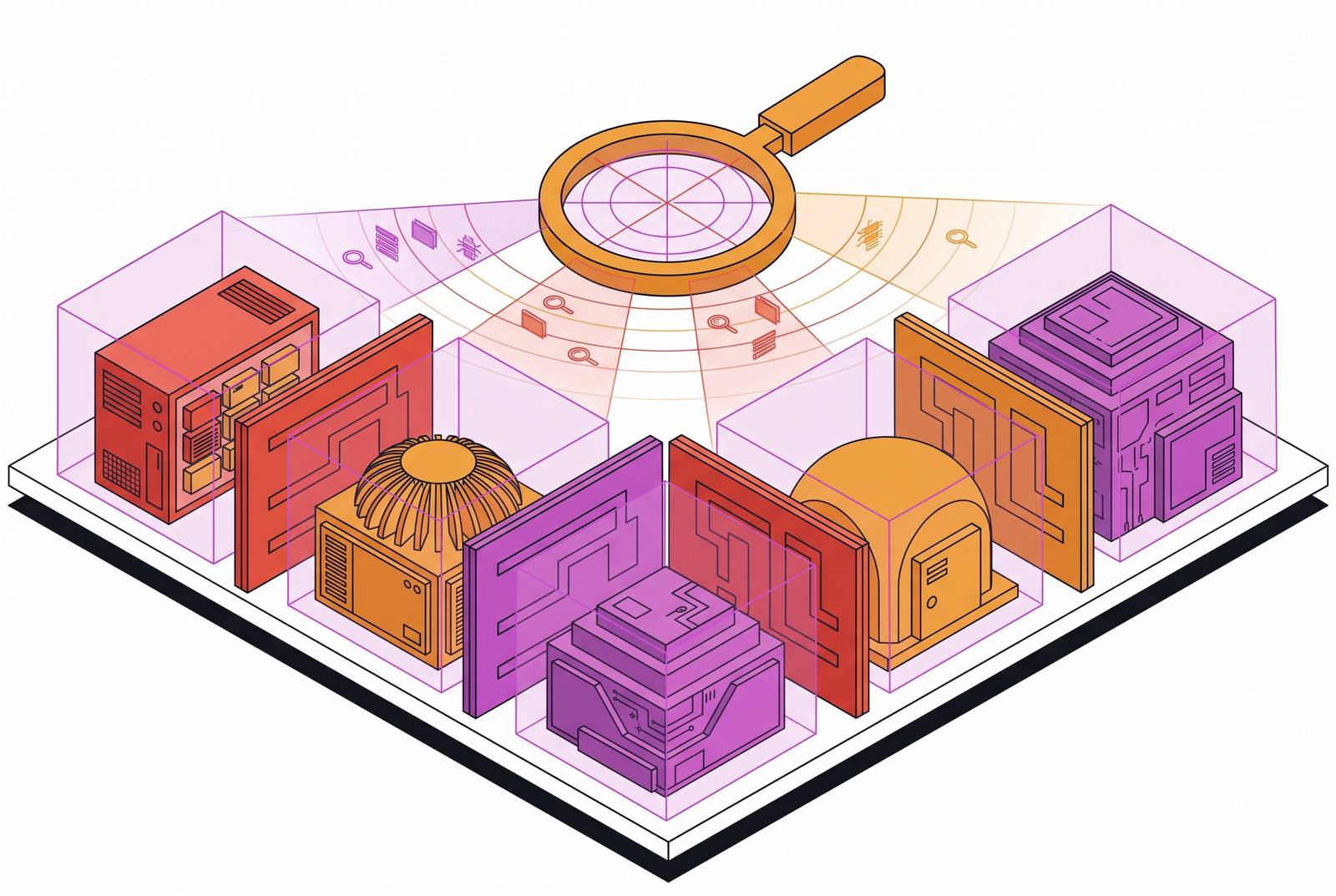
Resource pooling, as described in NIST's SP 800-145, is a model where computing resources are shared across customers on the same underlying infrastructure while staying logically apart. That sounds fine on paper. In threat hunting, it creates a real problem: the same shared infrastructure that lets a security platform spot patterns across hundreds of customers is the exact surface where one customer's confidential incident data could leak into another's environment.
If an indicator from Customer A's breach can sharpen detection in Customer B's environment, that's the whole point of sharing a platform. It's smarter than either customer defending alone. But nothing about that arrangement explains what stops Customer A's breach timeline, its list of affected systems, or the attacker's exact path through the network from leaking into Customer B's incident report too. Every multi-tenant security platform has to decide how it prevents Customer A's data from leaking into Customer B's incident report before any client should trust it with their data. The rest of this piece walks through where those boundaries actually sit, how they get enforced, and where they still give way.
What isolation means in a shared security platform, and where it breaks
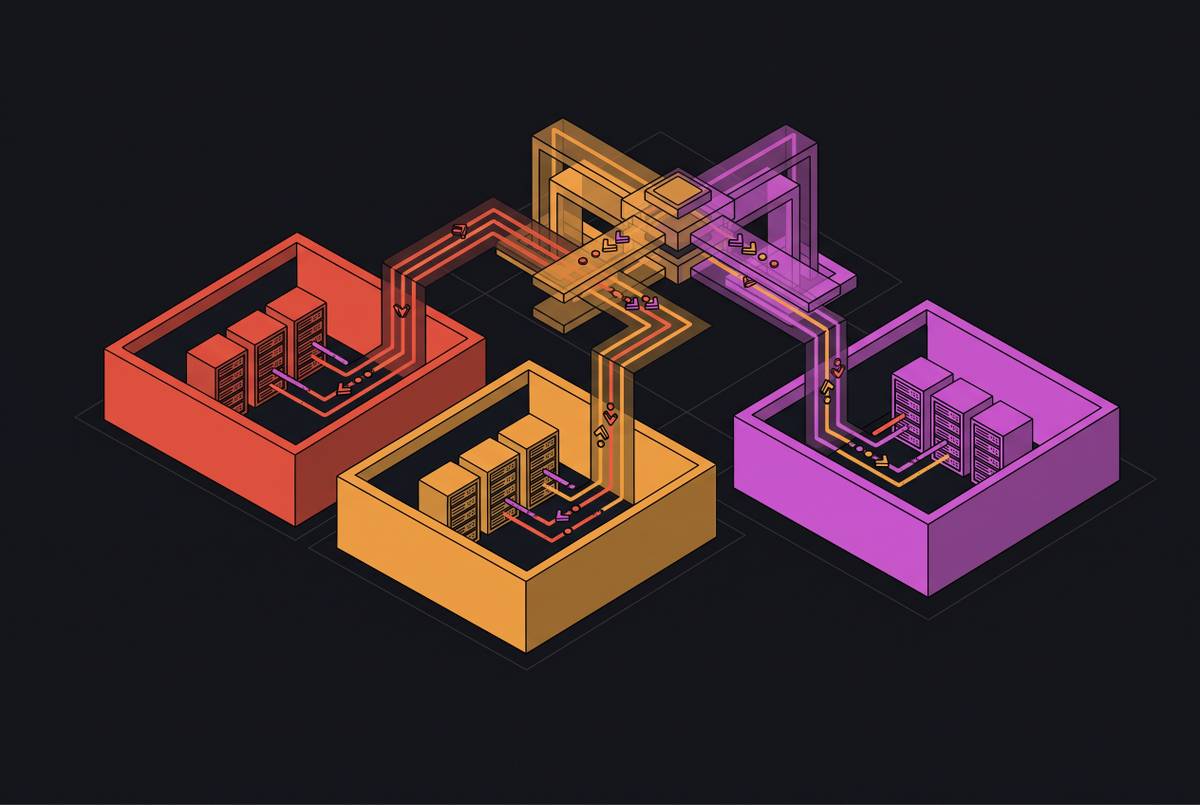
Isolation comes in a couple of flavors. Physical isolation means dedicated hardware or a dedicated database instance per tenant. It's the strongest boundary you can build, and it costs the most, since it gives up the resource pooling NIST's definition assumes. A hybrid model splits the difference: physical isolation for the most sensitive pieces while everything else runs on shared, pooled infrastructure.
Application-layer isolation is the weaker of the two, and it's the one that fails in practice. The most common failure is boring, which is what makes it dangerous: a missing tenant filter on a single database query. One forgotten WHERE clause, and Customer B's data shows up inside Customer A's dashboard. No attacker required, just an engineering gap nobody caught in code review. The filter can't be forgotten if it isn't a filter at all; it's a schema boundary. That's why database-layer enforcement beats application-layer checks every time.
Security platforms carry complexity problems a normal multi-tenant SaaS app never has to face. These are well-documented operational challenges in shared security platforms.
Detection logic has to stay walled off per customer. Customer A's behavioral baseline can't bleed into Customer B's anomaly detection, even when both customers' logs run through the same processing pipeline underneath. Data residency rules can directly conflict, too: Customer A, regulated in the US, needs US-only storage, while Customer B, based in the EU, needs EU-only processing. A platform serving both has to enforce two incompatible rules at once, on the same infrastructure.
And one customer's bad day can become another customer's slowdown. A major incident at Customer A floods shared infrastructure with log volume, and detection performance for Customer B, sitting on the same servers, quietly gets worse, with no warning and no obvious cause.
A November 2025 practitioner discussion around Microsoft Defender XDR put this exact ambiguity on display. Two test tenants, both showing port scan incidents from the same source IP, 10.10.10.10. In Sentinel, those incidents stay separate, one per tenant, no crossover. But the question raised was whether Defender XDR might recognize that same IP entity across multiple tenants and merge those into one combined incident. That's a live question practitioners are asking about a named enterprise platform running in production right now, not a hypothetical for a whitepaper.
How tenant boundaries are held operationally through identity and access controls
Identity and access management is where the boundary actually gets enforced, day to day. Every login, every API call, every admin action has to be scoped to whichever tenant that user belongs to. No exceptions.
Role-based access control has to tie permissions to two things at once: the user's role, and their tenant membership. An admin working inside Tenant A should have zero visibility into Tenant B, full stop, no matter how senior that admin is or what platform-wide permissions they hold elsewhere. Data isolation belongs at the database layer, not the application layer, because application-layer checks are far easier to misconfigure or forget. That's the same failure mode as the missing WHERE clause, just one level up the stack.
Customization has to run alongside all of that without punching holes in it. Independent detection rule tuning, custom alert thresholds, workflow definitions built for one customer, retention policies that vary by tenant: none of that should ever leak sideways into another tenant's environment.
Databahn's Beacon Architecture write-up describes a practical version of this called edge-tagging. Data gets tagged right at the edge of the collection pipeline, before it's ingested anywhere central, so governance systems can route and isolate it correctly from the start. As one illustrative example, a financial services customer in Singapore might need to route and store PII inside local cloud systems. A healthcare customer in Texas applies HIPAA-aligned masking at the edge, before that data ever touches the shared platform. None of this is a one-time setup. It's a running job: applying the right policy template to the right tenant, consistently, as the platform adds more customers over time.
How privacy-aware correlation separates commodity platforms from sophisticated ones
Going multi-tenant sharpens detection in ways a single customer's data never could on its own. A novel piece of malware or a new attacker IP surfacing in Customer A's incident can immediately tighten detection in Customer B's environment, often before Customer B even knows a threat exists. Population-level baselining catches deviations that one customer's own data would never reveal, since the statistical model draws on the full customer base instead of one narrow slice. Campaign detection, spotting the same attacker running coordinated operations against multiple, unrelated customers, is something no single organization could ever piece together alone.
Most vendors get sloppy by treating "sharing intelligence" as a single category, when it's actually two, and they carry very different risk. Indicators (an IP address, a file hash, a malware signature) are low-sensitivity. Incident context (a breach timeline, a list of affected systems, the attacker's path through a specific network) is high-sensitivity. Sharing the first makes the whole platform smarter. Sharing the second, even by accident, is a confidentiality breach. Anyone evaluating a platform should ask which one it actually shares, because plenty of vendors answer that question vaguely on purpose.
Stairwell offers a concrete example of doing this right. Client files get analyzed inside a dedicated, private cloud vault, never uploaded to shared public repositories like VirusTotal. Clients still get the benefit of file analysis, but their data never touches a public system where outsiders could expose it or cross-reference it against other sources. That's privacy-aware correlation: the mechanism that lets shared intelligence work without leaking one client's incident context into another's view. It's the line between a commodity platform and a genuinely sophisticated one.
Torq's MSSP Cybersecurity Trends 2026 report found AI platforms now handling 90 to 95% of Tier-1 alerts autonomously, with no human in the loop, a genuine efficiency gain that also adds a wrinkle: automated cross-tenant correlation running at machine speed means a boundary failure spreads faster. That's a real efficiency gain, no argument there. But automated cross-tenant correlation running at machine speed also means a boundary failure, if the isolation layer has a flaw, spreads faster than it would if a human analyst were checking each match by hand. Speed cuts both ways here.
Compliance obligations that make boundary failures legally consequential, not just operational
Any credible shared platform should be able to document its isolation model explicitly, so tenants can weigh it against their own risk tolerance. A provider that can't produce that documentation has a compliance gap of its own, no matter what other certifications it holds.
Each tenant's compliance obligations have to be independently verifiable, separate from every other tenant on the platform. A shared audit log or one aggregate compliance report covering the whole platform doesn't satisfy that requirement. It can't, by definition: a regulator asking about Customer A's data handling doesn't care what Customer B's logs show.
NIS2 and DORA are rolling into full effect through 2026, with plenty of organizations facing hard compliance deadlines by October 2026. Both frameworks demand fast, cross-system data correlation for incident reporting and risk management, which pushes platforms toward more shared infrastructure at the exact moment those same frameworks demand stricter data isolation. ContraForce's 2026 guide points to that contradiction directly: in ordinary SaaS, centralizing everything makes audits simpler. In security operations, centralizing everything runs headfirst into per-tenant compliance posture. A platform has to support conflicting data residency rules, for different customers, running at once, on the same infrastructure.
For any organization evaluating a shared platform, each tenant's compliance posture must be checkable on its own and defensible in front of a regulator without leaning on the vendor's overall track record. Due diligence means asking for per-tenant audit logs, per-tenant data residency documentation, and evidence of third-party penetration testing against the tenant boundaries specifically.
The bolted-on versus native architecture split and its effect on boundary reliability
Multi-tenancy bolted onto a tool built originally for single-tenant use creates a mess, and it's the choice most organizations should actively rule out. Operational debt piles up, compliance risk climbs, and scale hits a ceiling fast. The 2026 MSP landscape shows growing demand for platforms built for multi-tenancy from day one, not retrofitted after the fact, and that demand is a direct response to how often the retrofit approach fails.
A tool designed single-tenant first almost always treats isolation as an application-layer afterthought, bolted on later, instead of a database-layer foundation baked in from the start. That's precisely the architecture where a missing tenant filter turns into a cross-tenant leak, the failure mode covered above. It isn't a coincidence that the platforms with the cleanest track record on tenant boundaries are the ones that never had a single-tenant version to retrofit.
Rapid7's InsightVM supports customer data segregation while maintaining operational efficiency. Neither is a retrofit. The multi-tenant design was there from day one, and it shows in how each handles the edge cases (conflicting residency rules, per-tenant key rotation) that trip up bolted-on systems.
There's an economic argument here too, running alongside the security one. ContraForce's 2026 guide notes bulk licensing on multi-tenant platforms typically runs 30 to 50% cheaper per customer than stacking together separate single-tenant tools. Cost and boundary strength point the same direction, for once, which makes the native-architecture case an easy one to make to a budget owner.
None of this means centralization is free. The same console that gives an MSP one clean view across every tenant is exactly the surface that needs the tightest control. Centralized oversight and boundary enforcement aren't a trade-off against each other, whatever the marketing decks imply. They have to work together, or the whole model falls apart. Anyone evaluating a platform should ask two things: does isolation run at the infrastructure layer or the application layer, and has a third party actually tested that claim rather than taken the vendor's word for it.
What organizations sharing a multi-tenant platform should verify before trusting their data to it
Most organizations sitting inside a multi-tenant security platform didn't choose that architecture themselves. Their provider did. That shifts the burden of due diligence onto the customer, who ends up having to verify something they can't directly inspect from the outside.
Four questions do most of the work:
- Is data isolation enforced at the database layer, or only the application layer, and are encryption keys separate per tenant or shared across the whole platform?
- Are audit logs kept independent per tenant and available for direct review, or aggregated at the platform level where individual tenant activity gets buried?
- Does the vendor document its isolation model in writing, and has a third party actually tested the tenant boundary, with a date attached to that test?
- Does cross-tenant intelligence sharing expose indicators only, or full incident context, and what controls decide what's allowed to cross that line?
For smaller organizations especially, compliance deadline pressure from NIS2 and DORA running through October 2026 creates real urgency. Urgency is exactly the condition under which boundary verification gets rushed past in the name of hitting a deadline. Working through the four questions above takes days, not months. Skipping them to save a week isn't a trade worth making.
Platforms that bring device management, endpoint security, identity protection, and compliance automation together in a single architecture, built for one organization's own environment rather than as a shared service across many unrelated clients, sidestep the risk of one tenant's data leaking into another's at the root. For a lean team without dedicated security staff, that's often a more practical route than auditing a provider's multi-tenant isolation claims line by line.
Multi-tenant threat hunting delivers real value: sharper detection, faster campaign correlation, baselines no single customer could build alone. The best platforms have genuinely kept customer data and detections separated at the technical level, and that separation is checkable. Solved has to mean something backed by evidence: documented isolation models, independent audit trails, third-party penetration tests on record. Not a vendor's word, and not a certification badge on a sales page. The organizations whose data sits on that infrastructure have standing to ask for that proof, and the time to ask is before signing, not after something leaks.