Cross-Client Incident Correlation Without a Shared Data Lake
MSSPs must build correlation through federated intelligence, not shared data lakes.
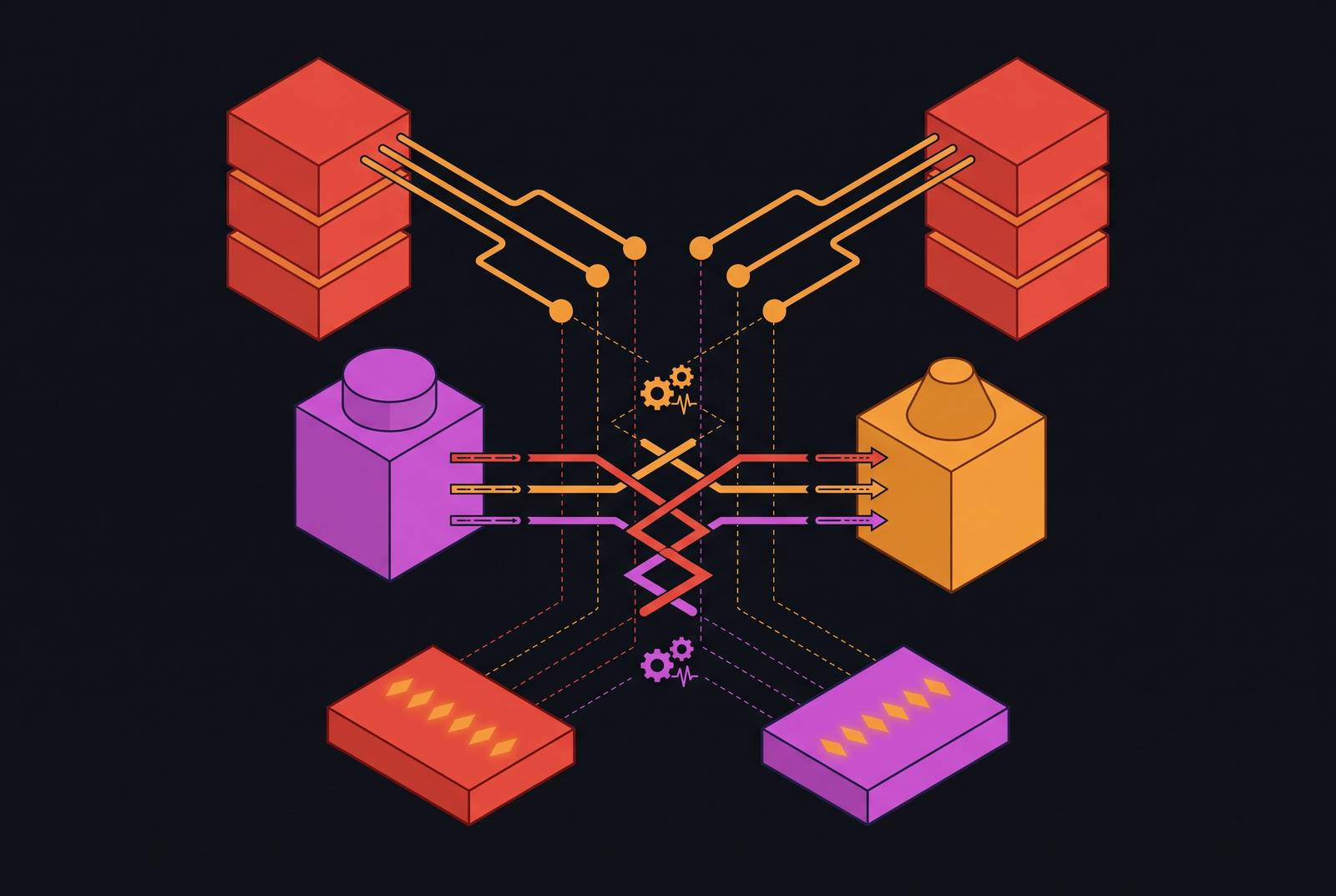
Cross-client incident correlation across an MSSP's book of business runs into a hard wall: tenant boundaries in platforms like Microsoft Sentinel and Defender XDR don't let incidents merge across clients, no matter how the stack is configured. That's not a policy choice someone forgot to flip on. It's baked into the architecture, and it forces MSSPs to solve correlation through operational workflow and tooling patterns instead of one shared data lake.
Start with the constraint itself, because it's more absolute than most people assume. Microsoft's own Community Hub states that the correlation engine inside Sentinel and Defender XDR never merges incidents across tenants, full stop. A Microsoft Q&A thread from November 2025 gives a clean example: Customer Test 1 logs a port scan incident from IP 10.10.10.10. Customer Test 2 sees a port scan from that same IP. In Sentinel today, those stay two separate incidents. The system has no mechanism to notice they're the same attacker hitting two different clients, because it was built to keep tenant data apart, not to compare it.
Multi-Tenant Operations (MTO) caps out at 100 tenants. Large MSSPs managing more than that have to run multiple MTO configurations or triage which tenants get priority visibility. Microsoft hasn't published a timeline for raising that ceiling. And the data-lake workaround some vendors point to has its own catch: per Microsoft Community Hub, the lake has to sit in the same Azure region as the primary Sentinel workspace, and it isn't available everywhere. Buyers need to check the region list before they plan around it as a fix.
The clearest way to state the implication: MTO gives an MSSP operational consistency and a single pane of glass. It does not give shared correlation. Those are different capabilities, and mixing them up is how architecture plans go sideways six months into a rollout.
What "cross-client correlation" means when shared data is off the table
The phrase gets used loosely, so it helps to split it into three separate things.
First, there's shared raw telemetry, meaning logs from one client physically sitting next to logs from another. Tenant boundaries block this, and that's the whole point of a tenant boundary.
Second, there's shared detection logic: the same analytics rule deployed to every client tenant at once. Content management within MTO enables this kind of rule distribution, and it's genuinely useful, but it's not correlation. It's distribution.
Third, and this is the one that actually works, there's shared enrichment. An IP gets flagged as malicious in Client A's environment. That verdict, the IOC hit, the threat-actor association, gets written to a shared layer that every other tenant can check against, without any of Client A's raw logs ever leaving Client A's environment.
That third option is federated intelligence, and it's the viable path. Cyware's multi-tenant model runs on this exact principle: insight from one client gets shared across the network in real time, so individual client defenses function as a collective without any log merging. Swimlane describes something similar, a shared intelligence layer that aggregates observables and verdicts from every connected tenant. An alert enriched once for Customer A becomes instant context the moment the same indicator shows up for Customer B.
None of this is about building one giant dataset. It's about making sure what one tenant's environment reveals about a threat reaches every other tenant fast enough to actually matter before that threat moves. That's the frame the rest of this piece works from: correlation, in a tenant-isolated world, is an information-sharing workflow problem. Not a storage problem.
Heterogeneous log schemas and the added difficulty they create before federation
Before an MSSP can share anything across tenants, it has to deal with a mess that exists inside a single tenant first.
Firewalls, EDR tools, identity providers, cloud platforms: each one writes logs in its own proprietary schema. What one vendor calls "user," another calls "account." What one system logs as "block," another calls "deny," and a third calls "drop," per Databahn. None of this is malicious or even careless on the vendors' part. It's just that every product grew up speaking its own dialect.
Analyst time absorbs the cost. Detection engineers spend real hours mapping field names between systems, time that should go toward writing correlation logic instead. Now multiply that by the number of client tenants an MSSP runs, each with its own mix of tools. The translation burden scales with how many clients you have, not with how much actual threat activity is happening. That's backwards: it makes federated search or shared enrichment expensive to run at scale unless something standardizes the vocabulary first, because unstandardized vocabulary imposes a hidden translation tax on every query across tenants.
How OCSF creates a common vocabulary that makes federation tractable
That standardization already has a name: the Open Cybersecurity Schema Framework, or OCSF. It launched in 2022 and has since become something close to an industry default, joining the Linux Foundation in November 2024.
OCSF started with 17 founding companies. OCSF started with 17 founding companies. Databahn reports it's now backed by more than 900 contributors and 200 participating organizations, spanning security vendors, government agencies, and enterprises. The founding group included major security and cloud vendors, which gives some sense of how broad the buy-in was from the start. The current release, version 1.4.0 from January 2025, adds event classes for cloud resource inventory, vulnerability findings, remediation activities, and threat intelligence enrichment.
What OCSF actually does is simple to describe: it defines one shared schema so "user" in Vendor A's log and "account" in Vendor B's log map to the same field automatically. No more manual field-mapping spreadsheets. For an MSSP, the payoff is direct: once every client tenant's telemetry gets normalized to OCSF before it hits the enrichment layer, that shared intelligence layer can compare observables across tenants without ever touching raw logs.
OCSF doesn't correlate anything by itself. OCSF doesn't correlate anything by itself. It's a prerequisite, a common language that makes correlation possible downstream. The actual correlation mechanism is a separate layer, built on top.
The operational patterns MSSPs use to correlate across tenant boundaries today
Four patterns recur in how MSSPs handle this today, and mature setups tend to run all four at once rather than picking one.
Federated search without moving data is a good example of the mechanism in Query.AI's approach: an analyst writes a query in plain language, the platform translates it into FSQL, then further translates that into KQL, SQL, SPL, or whatever native language each backend speaks, applying OCSF normalization on the fly. The query runs against each tenant's data store in place. Nothing moves. The analyst never needs to know where a given tenant's logs live or what schema they're in.
A shared enrichment layer sitting above tenant data. IOC verdicts, threat-actor tags, and observable scores get written to a common layer the moment they're produced in any one tenant. When the same hash or IP shows up in tenant two, the enrichment is already sitting there waiting. Swimlane states this cuts investigation time and surfaces recurring threats across an entire client portfolio, because the analyst starts with context instead of starting from zero every single time.
Content management as a stand-in for real correlation. Microsoft's Defender MSSP documentation describes content management capabilities that allow detection and automation rules to be deployed across customer tenants. If one client's environment surfaces a new attacker technique, the detection logic for it can reach every other tenant within minutes. This isn't correlation in the strict sense, since nothing gets compared across tenants automatically. But it's the fastest operationally realistic substitute available when raw data legally and architecturally cannot cross tenant lines.
AI-assisted detection logic across schemas. The direction the field is moving points toward AI systems that generate cross-platform detection queries automatically, correlating across heterogeneous schemas without a human doing the field-mapping work by hand. OCSF normalization is what makes this feasible, functioning as the common vocabulary the AI layer can build on.
Where SOAR fits and breaks down in multi-tenant environments
Once an alert gets enriched, something has to route it to the right response workflow for the right client. That's SOAR's job in this picture: orchestration, not detection.
The trouble is that most SOAR platforms weren't built with multi-tenancy in mind. They came out of an enterprise-first era, where one company meant one environment. Bolt that architecture onto an MSSP running dozens of client tenants, and things start to crack. Data isolation needs constant workarounds. Every client with slightly different workflow needs adds another one-off configuration, and pretty soon the platform sprawls into something nobody fully understands. ContraForce notes that cross-client access controls stay fragile in legacy SOAR platforms because multi-tenancy was never a first-class design concern.
The performance numbers back this up. ContraForce reports traditional SOAR engines running average delays of 2 to 10 seconds per workflow execution, and struggling outright when alert volume spikes across many clients at the same time. That's not a rounding error when a portfolio is under active attack. A 2025 Torq survey cited by ContraForce found 90% of security professionals say their SOAR platform demands significant ongoing investment just to keep justifying its ROI, and that most shops only use 10 to 20% of the automation capability they're actually paying for.
For an MSSP specifically, the scaling math gets worse with every new client. Each new integration point, each tool a client insists on keeping, each client-specific workflow tweak, adds development overhead that compounds instead of leveling off. ContraForce says the market's answer is AI-native platforms built with multi-tenancy as a first-class design principle from day one, running no-code workflow builders and event-driven processing instead of the old ticket-and-playbook model. Skipping that shift makes the automation layer become the very bottleneck that undoes everything the enrichment and search patterns above were built to fix.
Compliance pressure and its effect on the timeline for getting this architecture right
NIS2 is rolling into full effect through 2026, with many organizations facing hard compliance deadlines, and regulatory pressure from frameworks like DORA is adding to the urgency. NIS2 specifically requires a 24-hour early warning notification for significant incidents.
That 24-hour window is the whole story here. If incident response automation can't detect a qualifying event and produce a draft notification inside that window, the organization is out of compliance, plain and simple. SOAR workflows built with NIS2-specific notification playbooks have stopped being a nice-to-have for any organization with EU operations. They're a baseline requirement now.
Fragmented telemetry makes that deadline hard to hit. Slower response times, messier audit trails, more manual steps between detection and notification. An MSSP whose cross-tenant enrichment still depends on an analyst manually connecting dots cannot reliably hit 24 hours across a full client portfolio, especially when an incident touches more than one tenant at once. The pressure isn't theoretical anymore. It has a clock attached to it.
The next layer: federated reasoning in this architecture's future
The federated intelligence model described above isn't just a workaround for today's tenant boundary. The same isolation-by-design architecture that keeps tenants apart today is what positions MSSPs to eventually fuel cross-tenant analytics, including AI-assisted threat correlation and, further out, federated reasoning models trained on patterns across an entire managed estate.
That's a shift in framing more than a shift in technology. MSSPs stop thinking in terms of managing tenants and start thinking in terms of managing intelligence, where the tenant boundary is just a routing constraint rather than the whole architecture. Practically, that means the OCSF normalization work isn't just today's convenience, it's the prerequisite any future reasoning model will need to function across a diverse client base. The shared enrichment layer isn't a stopgap either, it's a durable investment that gets more valuable as the client roster grows. Same with content management and detection-logic distribution: the value compounds with scale rather than staying flat.
Federated reasoning models aren't shipping yet. They're directional, a next wave without a release date attached to it. But the MSSPs building the normalization and enrichment discipline into their stack now are the ones positioned to absorb that capability the moment it's ready. The tenant boundary was never a problem waiting for a patch. It's a constraint to build around, and the firms doing that deliberately today are the ones who won't be starting from scratch when the next layer arrives.
Sources
- Microsoft Defender portal implementation guide for Managed Security Service Providers (MSSPs) - Microsoft Defender XDR
- The governance shift: RBAC, URBAC, data lake, and MSSP | Microsoft Community Hub
- MSSP Multi-Tenant Handling with Lighthouse and Defender XDR - Microsoft Q&A
- Best SOAR Alternatives for MSSPs in 2026: Beyond Legacy Automation | ContraForce
- 11 Best Incident Response Automation Tools in 2026: SOAR, XDR & Agentic AI Compared
- swimlane.com
- databahn.ai
- What Is OCSF, and Why Normalize Security Data Now - Databahn