ISAC Membership for MSPs Serving Regulated Verticals
Joining the right ISAC gives MSPs threat intelligence matched to their clients' regulatory sector.
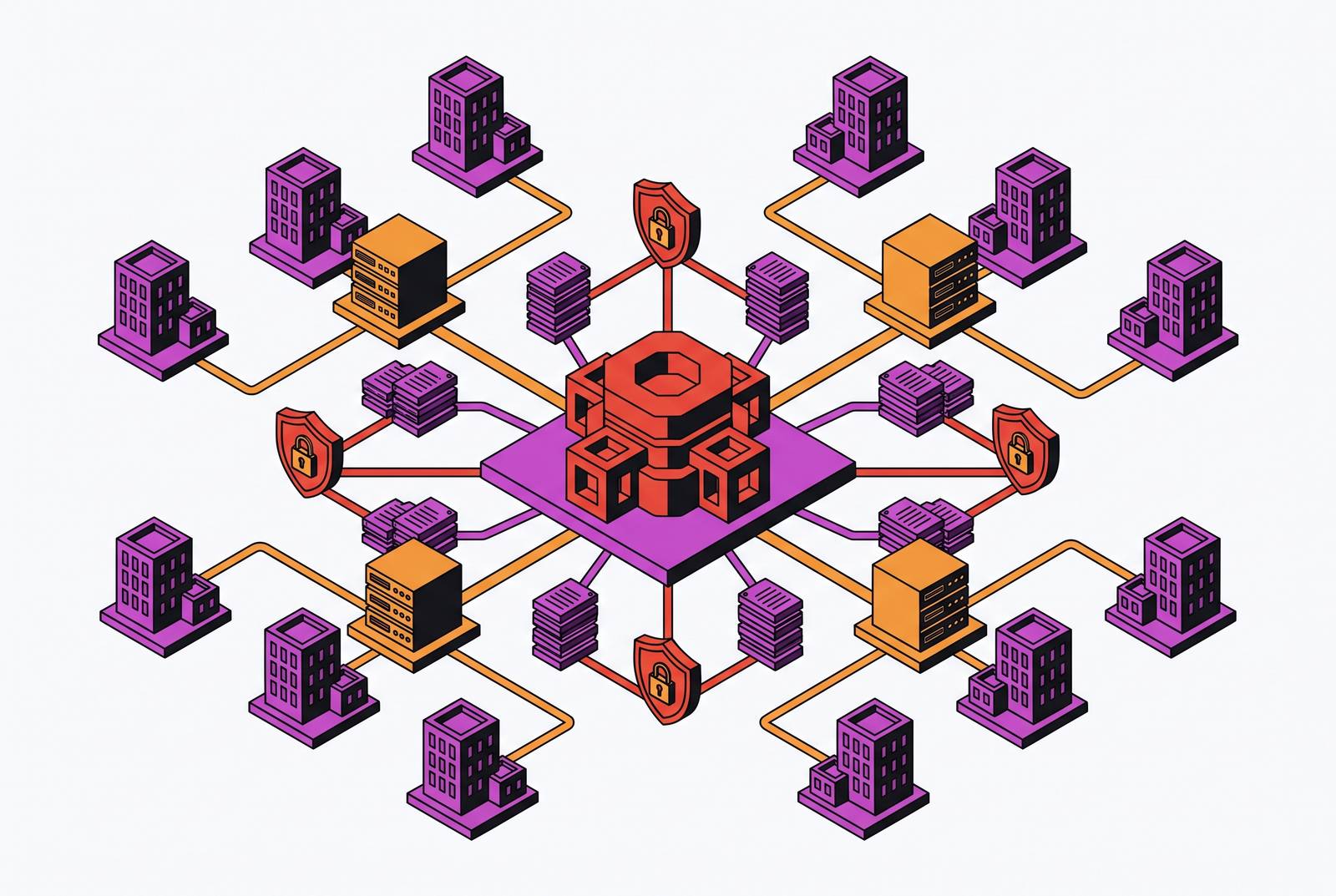
ISAC membership gives MSPs serving regulated clients a direct line into sector-specific threat intelligence, the kind that generic vendor feeds can't replicate because it comes from peers facing the exact same regulatory pressure and attack surface. But that value depends entirely on picking the right ISAC, or ISACs, for the verticals actually on the client roster. Get that match wrong, or skip the decision altogether, and an MSP ends up defending regulated clients with intelligence built for someone else's threat model. Most MSPs default to whichever ISAC they've heard of, usually MS-ISAC or FS-ISAC, and that's the wrong instinct. The right ISAC is whichever one matches the client sitting in front of you, full stop.
ISACs, the sectors they serve, and eligibility
The ISAC system traces back to Presidential Decision Directive 63, signed May 22, 1998, which set up the framework for sector-based threat sharing between government and industry. The first sector ISACs formed the following year. A 2015 executive order pushed the model further, directing DHS to encourage more of these groups to form and giving legal cover, limited liability protection, to organizations that voluntarily shared threat data. Without that protection, plenty of legal departments would have blocked participation.
Today, the National Council of ISACs lists 21 member organizations covering sectors from financial services to aviation to the defense industrial base. For an MSP managing regulated clients, a handful matter directly.
MS-ISAC (Multi-State ISAC) serves a national network of state, local, tribal, and territorial governments. Eligibility runs wide: state agencies, local governments, public schools, public utilities, public healthcare organizations, and tribal and territorial governments all qualify. Find it at cisecurity.org/ms-isac.
FS-ISAC covers financial services, with membership details at fsisac.com/membership. Health-ISAC (H-ISAC) covers healthcare, at health-isac.org/h-isac-membership. IT-ISAC covers the IT sector itself. MSPs can join directly as members of that sector, with benefits listed at it-isac.org/benefits. MFG-ISAC covers manufacturing, running as a collaboration portal where vetted practitioners share threat data anonymously or with attribution, depending on how sensitive the submission is. Space ISAC covers the space sector, at spaceisac.org.
Most sector ISACs build membership around the sector being served. An MSP with a heavy healthcare book can often join H-ISAC as a technology partner or vendor member, but eligibility rules differ by ISAC, so confirm them directly rather than assuming. IT-ISAC is the cleanest case here: it names the IT sector, and MSPs sit inside that sector by definition, no workaround needed.
The MFG-ISAC model shows how the sharing actually works day to day. Staff pull in alerts from government sources, private security vendors, and open-source feeds, then layer that on top of what members submit themselves. Cybersecurity frameworks, industry associations, and regulators around the world now point toward ISAC membership as a recommended practice, not an optional extra.
One Health-ISAC member put it bluntly: "If you're not a member of Health-ISAC or the ISAC relevant to your sector, you need to join right now. This is where intelligence is being shared between your cyber peers, and this is where you are going to learn about something you are never going to read in the news or on Reddit or in some random social media thread." Knowing which ISACs exist is step one. Figuring out which one deserves priority based on an MSP's actual client mix is the harder question, and the one that actually pays off.
The different compliance burden MSPs serving regulated verticals face compared to their clients
Compliance used to mean a binder full of policies pulled out once a year for an audit. That era is done. Modern frameworks demand continuous validation, not point-in-time paperwork, and regulators keep tightening requirements on both the regulated organization and any MSP touching its systems, with bigger penalties attached when something slips.
The frameworks stack up fast, and an MSP serving multiple verticals often has to track all of them at once.
HIPAA treats MSPs acting as business associates as directly liable for certain violations, not just the healthcare client sitting downstream. Proposed updates to the HIPAA Security Rule point toward more specific technical demands, phishing-resistant multi-factor authentication among them.
CMMC 2.0 reshapes defense industrial base compliance. Some Level 2 contracts already require C3PAO certification for organizations handling controlled unclassified information. Broader rollout was set to begin November 10, 2026, but the Department of Defense suspended that Phase 2 timeline on July 13, 2026, with no replacement date confirmed yet.
PCI DSS 4.0.1 became mandatory March 31, 2025. It requires proof that controls have run continuously, along with stricter requirements around payment page integrity and script management.
CIRCIA, once finalized (likely 2026), will cover roughly 311,000 small entities and impose mandatory cyber incident and ransom payment reporting requirements on a tight clock. An MSP that can't support that reporting clock puts a client in regulatory trouble on top of whatever operational mess the incident already caused.
GDPR fines run up to 4% of global annual turnover or 20 million euros, whichever is bigger, and regulators want proof the controls worked, not a policy document stating they exist. State privacy laws add another layer: 20 states now have comprehensive privacy statutes, each with its own definition of sensitive data and its own trigger thresholds. An MSP with clients spread across state lines has to track all of them separately, one by one.
The failure pattern repeats across every framework: a gap between what the policy document says and what the environment actually does. Every control needs a standard operating procedure behind it and a record proving the control ran. That gap is exactly where sector ISACs earn their place. CMMC and HIPAA don't just want controls on paper, they want current threat awareness and documented incident response capability. ISAC intelligence is built to close that specific gap.
What each major ISAC provides to members and what that means for an MSP's regulated clients
MS-ISAC, for SLTT and government clients, offers tailored threat intelligence, a 24x7x365 SOC, working groups, STIX/TAXII feeds, MISP access, and malicious domain blocking and reporting (MDBR). Elections organizations get an extra layer on top, including annual threat assessments, a weekly executive threat briefing, trend reports, real-time alerts, and briefings held both virtually and in person. Coverage spans law enforcement, public safety answering points, K-12 schools, public healthcare, and critical infrastructure including ICS/SCADA systems. For an MSP juggling a county government, a school district, and a public utility, one membership covers the sector threat picture for all three at once.
FS-ISAC, for financial services clients, runs automated STIX/TAXII and MISP feeds alongside twice-monthly analyst briefings on regional and global threats. Its analyst teams flag emerging sector-wide threats and response strategies as they develop. On the exercise side, FS-ISAC runs on-demand CAPS discussion exercises tuned separately for banking, securities, and insurance, plus hands-on cyber-range work and cross-sector exercises like NATO's Locked Shields, Tri-Sector, CyberStorm, and GridEX. The fit here is precise: financial SMBs face a threat mix that combines social engineering, rising ransomware pressure, and significant recovery and prevention costs. FS-ISAC intelligence is built around exactly that mix.
Health-ISAC, for healthcare clients, provides sector-specific intelligence and peer-to-peer sharing among vetted practitioners. The numbers explain why that matters: ransomware pressure on healthcare organizations continues to rise, recovery from incidents routinely stretches operations thin, and phishing-driven breaches carry a heavy average cost per incident. For MSPs acting as business associates under HIPAA, that direct liability turns advance threat intelligence from a nice-to-have into a compliance asset.
IT-ISAC gives MSPs a look at threats aimed at their own infrastructure, separate from whatever sector-specific ISAC covers their clients. Its 2025 Annual Ransomware Report tracked 6,351 total attacks, with 746 hitting the IT sector specifically, up sharply from 300 IT-sector incidents in 2024. Threat actors are leaning harder into one-to-many supply chain attacks: compromise one platform, hit every downstream customer at once. That's the MSP threat model, described almost exactly. The most active ransomware groups targeting IT right now include Qilin, CL0P, Akira, Play, and INC Ransom.
MFG-ISAC, for manufacturing and industrial-control-heavy clients, runs as a portal where vetted practitioners trade data on phishing, malware signatures, IoT vulnerabilities, and industrial-control-specific risks, anonymously or attributed depending on sensitivity. Staff round that out with alerts pulled from government and open sources. Manufacturing clients running OT and ICS environments need that specific context, since generic IT threat feeds usually skip it.
An MSP with clients spread across government, healthcare, and manufacturing shouldn't expect one ISAC to cover all three. Build a portfolio sized to the actual client base.
The MS-ISAC funding collapse's impact on MSPs serving government clients right now
DHS ended its $27 million annual federal funding for MS-ISAC beyond September 30, 2025. That funding had covered membership at no direct cost for nearly 19,000 organizations under a cooperative agreement with DHS and CISA. That arrangement is gone.
The replacement is a fee-based model, tiered by the member's annual operating budget. Small school districts are looking at around $1,495 a year; larger counties and states scale up into the tens of thousands. Complicating things further, the State and Local Cybersecurity Grant Program specifically bars agencies from using federal cyber grant dollars to cover MS-ISAC membership, so the money has to come from general funds or state appropriations instead.
Organizations that had Endpoint Detection and Response service through the old federal funding keep access through September 30, 2026, at no extra cost, but only if they buy MS-ISAC membership, and MSPs need to be tracking that deadline now. Organizations that had Endpoint Detection and Response service through the old federal funding keep access through September 30, 2026, at no extra cost, but only if they buy MS-ISAC membership. After that date, CIS can offer EDR as a separate paid service. Eleven states had signed up for the new paid membership model by September 2026.
The state-by-state picture varies widely: some states have "handled" the transition while others are still scrambling. Texas moved fast: its Department of Information Resources secured a statewide membership covering more than 6,000 eligible SLTT entities, building on the more than 1,500 Texas government entities already enrolled in 2025. Any Texas SLTT entity that hasn't joined yet can do so at no cost under that procured membership, which runs through November 5, 2026.
Other jurisdictions are absorbing the cost less gracefully. A school district in one state approved a $1,000-a-year membership out of its General Fund, a manageable line item. Okaloosa County in Florida estimated covering the entire state would run $850,000 a year, a number now fueling debate over whether Florida should step in and negotiate statewide, the way Texas did. A county in another state got pricing back at roughly $30,000 annually, a real budget hit for a county that size.
The funding shake-up is already visible in procurement activity. A borough in another state put out a request for proposals to upgrade firewalls, switches, and wireless access points across multiple locations. A city in another state called for proposals from qualified MSPs to run co-managed IT services under a hybrid model, aimed at keeping mission-critical systems available, with bids due the same day. The Texas Local Government Purchasing Cooperative went out for SaaS products and cybersecurity assessment services, due October 2, 2025.
For MSPs, this is a live conversation that needs to continue, not a background detail to mention once and move on. Clients that leaned on MS-ISAC's free threat intelligence and SOC coverage now face a real gap, and an MSP that understands the new fee structure can help a client budget for renewal, weigh the cost against alternatives, or at minimum understand what disappears if they walk away. Governance is shifting too: MS-ISAC currently runs on an Interim Member Governance Board of volunteer members while a revised charter gets drafted. This is a structural transition, not a simple price increase, and it is still unfolding.
How to match ISAC membership to the verticals an MSP serves
The decision comes down to one question: which regulated verticals make up the bulk of the client base? ISAC value only holds up when the sector match is right. That means working through the logic vertical by vertical rather than picking the most recognizable name off the list.
For SLTT government clients, MS-ISAC is the built-for-purpose option and no real substitute exists. But the fee shift changes the homework involved. MSPs need to check whether a client's state has negotiated a statewide membership the way Texas has (through November 5, 2026), leaving independent budgeting as the only option if it has not. Raise the September 30, 2026 EDR transition deadline with clients now, before it turns into a scramble nobody planned for.
For healthcare clients, Health-ISAC lines up with the threat data and the HIPAA business-associate liability MSPs are already carrying. For financial services clients, FS-ISAC's exercise programs and twice-monthly briefings match a sector where social engineering and ransomware are both climbing at once. For manufacturing clients running OT or ICS environments, MFG-ISAC fills a gap that standard IT feeds simply don't reach.
None of these are exclusive choices, and treating them as if they were is the mistake to avoid. An MSP juggling a school district, a regional hospital system, and a mid-sized bank has a real case for three separate memberships, not one. IT-ISAC sits on top of all of it as a different kind of coverage entirely, protecting the MSP's own infrastructure rather than a client's sector, which matters given how often supply chain attacks now aim at the platform itself rather than the end customer.
Skipping this decision, or defaulting to whichever ISAC has the most name recognition, leaves regulated clients holding threat intelligence built for somebody else's risk profile. Sector-specificity is the entire point of the ISAC model. Treating membership as a checkbox instead of a matched decision defeats the whole exercise before it starts.
Sources
- MS-ISAC® Membership FAQ
- What MS-ISAC’s Shift Means for SLED Vendors | GovSpend - Blog
- Texas Secures MS-ISAC Statewide Membership on Behalf of Texas Government Entities | Texas Department of Information Resources
- Multi-State Information Sharing and Analysis Center
- Eleven States Have Signed Up for MS-ISAC’s New Paid Membership
- fsisac.com
- health-isac.org
- nationalisacs.org