IR Runbook Templating for Multi-Client MSPs
Template systems let MSPs run consistent incident response across dozens of clients at once.
MSP-managed incident response isn't a single-environment discipline; it's a multiplication problem. An MSP with fifty clients doesn't run fifty versions of one process. It runs fifty distinct operational setups, each with its own tools, contracts, and regulatory exposure, and a single security event can force all fifty into motion at once. That reality calls for a different kind of runbook, built as a template system instead of a one-off document, and the gap between those two approaches decides whether an MSP survives its first serious multi-tenant incident or gets buried under it.
The stakes aren't hypothetical. A large majority of MSPs report having been breached at least once in recent years, according to CyberSmart's survey work on the sector, which means IR planning stopped being a compliance checkbox a while ago and turned into a weekly operational demand. Infrascale's 2025 research on incident response found that unclear response plans rank as the single biggest obstacle organizations face once an incident actually hits. For an MSP, that obstacle doesn't show up once; it shows up across every tenant on the books, at the same time, under different contracts and different regulatory clocks. Clients now expect the MSP to run the response itself, not just back up an in-house team from behind the scenes, and that shift means MSPs carry the accountability of an enterprise security function without the budget to write a custom runbook for every client. Say it plainly: an MSP that keeps writing one-off runbooks per client has already lost the race against its own growth, whether or not the invoice says so yet.
What breaks down operationally when MSPs handle IR without a template system
Cognitive overload is the first casualty, and it compounds fast. An engineer running three simultaneous incidents across three clients has to switch VPNs, switch ticketing projects, and switch communication channels, sometimes mid-sentence. That switching cost isn't just lost minutes before the actual troubleshooting starts; it raises the odds that a step gets skipped, that severity gets misjudged, or that a procedure written for Client A gets applied to Client B's environment, where it doesn't fit and can do real damage.
SLAs make this worse when they live in someone's memory instead of in a system. One client pays for a fifteen-minute response guarantee, another has a relaxed four-hour window, a third has tiered SLAs by severity. Without that logic built into the runbook itself, responders fall into one of two failure modes: they treat every ticket like a P1 and burn the team out, or they blow through a contractual response window and trigger a penalty clause nobody remembers signing.
Then there's turnover, which turns institutional knowledge into a flight risk. When the technician who built a client's informal runbook leaves the company, that runbook leaves with him, and whatever's left behind is usually a half-finished wiki page nobody trusts. Service quality ends up depending on who's on shift rather than on a process the whole team can run the same way. Configuration drift follows the same pattern from a different angle: a fix made to one client's runbook rarely gets copied to the other forty runbooks running the same underlying logic, so documentation and reality slowly pull apart until nobody's sure which one to trust mid-incident.
Onboarding adds a time-pressure problem on top of all this. Winning a new client often comes with a tight go-live deadline, and building a runbook from scratch for each new tenant can turn what should be a two-day setup into a two-week one. That mismatch creates risk before the client has even had a real incident, and rising ticket volume pushes every one of these pressures past the point where ad-hoc systems can keep up.
Clarifying what a runbook actually is before building one
Fix the vocabulary before building anything, because MSPs regularly mix up three documents that do entirely different jobs. A policy states what must be done and why the organization committed to doing it; it doesn't say how. A playbook lays out the overall process flow for a category of incident at a high level, the sequence of major activities. A runbook is neither. It's the operator-level document that tells a technician exactly what to do, right now, in what order, with which commands.
A real runbook is action-oriented, not reference material. That means copy-paste-ready commands instead of prose descriptions, and it means writing down expected output for both the success case and the failure case, so the operator knows immediately whether a step worked. Trigger conditions need to be specific enough that the correct runbook gets pulled automatically, based on the alert or symptom pattern, rather than after someone stops to think about which document applies.
Every runbook template, no matter the client, needs the same skeleton: a unique task ID tied to the ticketing system, a task name with a one-sentence description, defined trigger conditions, a list of prerequisites (access, tools, pre-flight checks), numbered steps with expected outputs at each stage, and clear escalation paths for when a step doesn't fix the problem.
NIST SP 800-61 Rev. 3, published in April 2025, sets the governing standard here, and it changed the underlying model in a way that matters for runbook design specifically. The old four-phase IR lifecycle gave way to a continuous model built around CSF 2.0's six functions, grouped into preparation (Govern, Identify, Protect, plus continuous improvement) and response (Detect, Respond, Recover). Preparation and response aren't sequential stages anymore; they interlock, and a runbook has to support the response moment itself while feeding lessons back into preparation, instead of treating the incident as closed once the ticket resolves. Whatever else a runbook is, it isn't a narrative writeup, a policy restatement, or a flowchart with no executable detail. Confusing those forms is the most common reason template projects fail before they start.
How to architect a template system that scales across dozens of clients
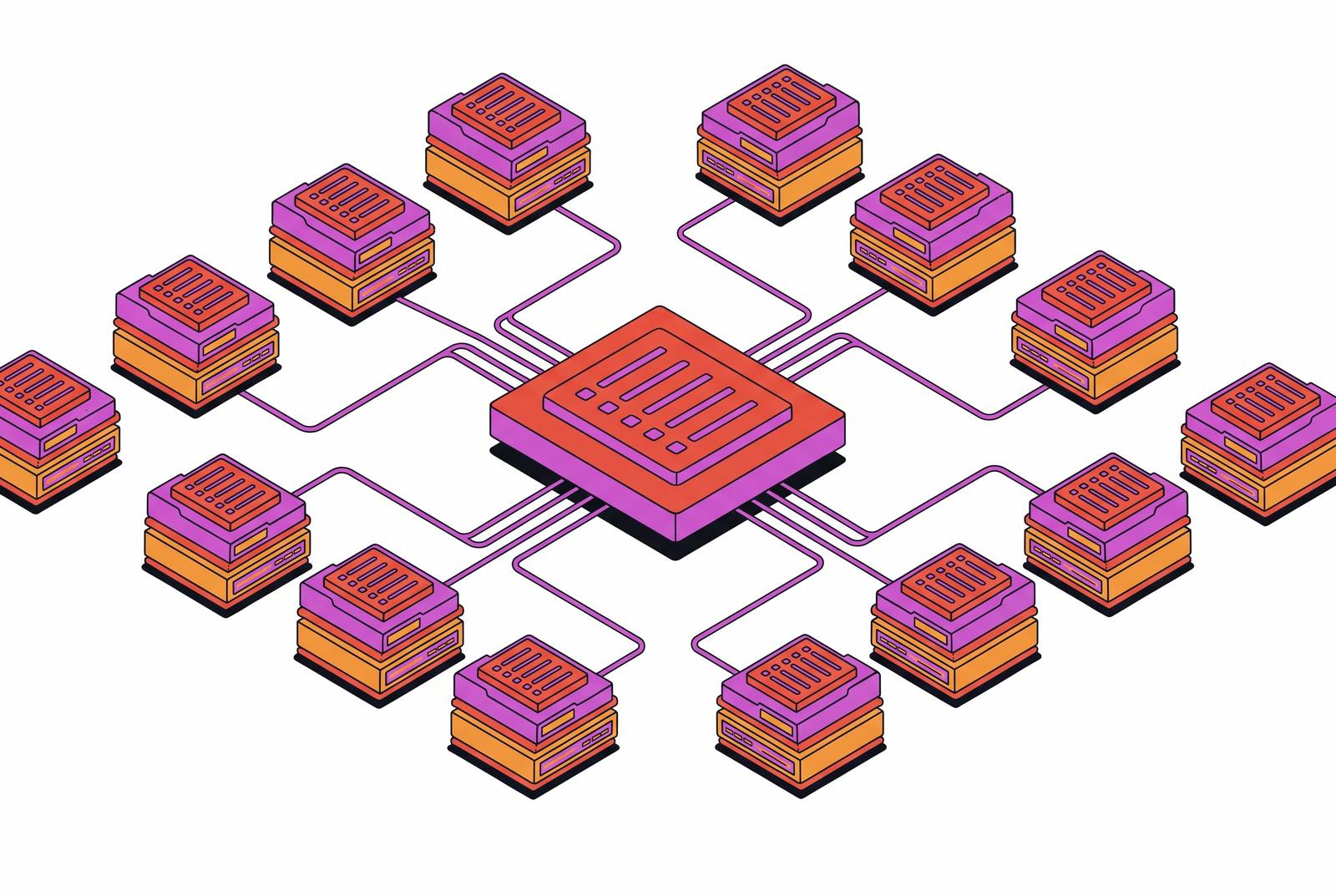
The core design decision is a split: a master runbook template carries the universal IR logic, and everything specific to a given client sits in a separate variable layer that fills in the template at runtime. Adding a new client under this model means filling in a variable set, not writing a new document. Incident.io's workflow cloning approach shows the mechanic well: clone a "Standard Premium Client" template, swap in the client-specific fields, and the runbook runs without a rebuild.
What goes in that variable layer matters as much as the split itself. Client name, primary IR contact, and after-hours contact are the baseline. Regulatory classification, whether the client falls under HIPAA, CMMC, PCI DSS, GDPR, or none of the above, is a single field that controls which compliance steps surface in the runbook. SLA tier and P1 response target drive escalation timing. The client's tooling stack (RMM, EDR, SIEM, ticketing platform) decides which specific commands and integrations the runbook actually calls. Escalation chains, network topology notes covering segmentation, cloud tenants, and VPN access, plus breach notification deadlines specific to that client's regulatory obligations, round out the layer.
Build the client-scoped templates in order of frequency, not alphabetically and not by whichever incident type feels most dramatic. Phishing and business email compromise sit at the top by sheer volume, so that template gets written first. Ransomware comes next, and containment speed is the variable that decides outcomes, so the runbook needs to support isolation decisions measured in minutes, not hours. Lost or stolen devices matter for clients with field staff or hybrid workforces. SaaS account takeover is growing fast as a vector, and for Microsoft 365-heavy clients specifically, the runbook needs distinct sub-scenarios for MFA fatigue attacks, OAuth consent abuse, mailbox rule manipulation, and credential reuse, because those don't share one response path even though they sit under the same broad category. Identity-based attacks now make up most IR caseloads industry-wide. That's the case for building out identity and email templates first, ahead of the obvious ransomware playbook, not after it.
Ambiguous incidents deserve their own path inside the template, instead of getting forced into either "confirmed incident" or "ignore." That path should include a provisional incident record with a set review time and increased monitoring, explicit guidance on what to tell the client and what to hold back, and clear conditions for closing the provisional record, escalating it, or converting it into a full IR engagement.
Containment steps need to be idempotent: running the same containment action twice should produce the same safe result, not a second, different effect. Destructive operations, account deletion or device wipes, need a human approval gate before execution, full stop, and a dry-run confirmation of impact before anything destructive runs, so the runbook itself never becomes the source of secondary damage.
Metrics belong in the template from day one, not bolted on after. Mean time to acknowledge and mean time to resolve, tracked per tenant, incident frequency by type and client, recurrence rate, SLA impact, and documentation completeness all need dedicated fields. Built this way, the template doubles as a measurement instrument, not just a set of instructions.
Layering compliance obligations into the template without rebuilding it per framework
A mid-sized MSP's client list typically spans several regulatory frameworks at once: healthcare clients under HIPAA, defense contractors under CMMC, EU-facing clients under GDPR, and organizations aligned to ISO 27001, all needing different response steps for what is functionally the same category of incident. Writing a separate runbook for each framework is the wrong move; it just multiplies the maintenance problem the template was built to solve. The fix is conditional compliance modules inside the master template, switched on by the regulatory classification variable already sitting in the client layer.
The HIPAA module needs a breach risk assessment triggered by any potential ePHI exposure, notification duties covering affected individuals and regulators within sixty days without unreasonable delay, and record-keeping built directly into the documentation steps instead of reconstructed after the incident closes.
The GDPR module runs on a tighter clock: seventy-two hours from the moment the controller becomes aware of the breach, and the template needs to surface that deadline the instant the client variable flags EU data. MSPs serving both EU and non-EU clients need genuinely separate notification workflows, triggered conditionally from the same master template rather than maintained as two disconnected documents.
CMMC's module carries stricter continuous monitoring and incident initiation timelines than typical commercial SLAs, and documentation currency is itself an audit target, so the record-keeping steps have to meet DoD expectations, not generic MSP standards. ISO 27001's module ties incidents back to the statement of applicability and risk assessment, so the runbook needs a field capturing exactly which control was implicated, and post-incident improvements need to route back into the risk register instead of just closing the ticket.
Treat overlap between frameworks as free efficiency, not extra work. Access management, encryption, and incident response controls show up in both HIPAA and CMMC, so a shared control map inside the template avoids duplicating steps for clients who fall under both. That matters more than it sounds like it should, because regulatory change isn't slowing down. The 2025 ISMS.online State of Information Security survey found that a large share of organizations now treat the pace of regulatory change as a genuine threat to sustaining compliance, with third-party risk management ranking among the top security challenges cited. A template whose compliance modules live in one place and push outward to every affected client runbook holds up against that kind of change far better than a stack of per-client documents that each need separate edits every time a regulation shifts.
How automation integrates with runbook templates to handle MSP scale
A precisely built template is what makes automation possible, not something automation replaces. AIOps tools and runbook automation platforms can only run steps written with real precision; feed automation a vague runbook and it produces vague, unreliable automation. That ordering matters more than most MSPs admit: buying an automation platform before the runbooks are written just automates the chaos faster. For known attack patterns, though, automated execution can start containment before a human analyst is even paged, and that head start matters in something like ransomware, where minutes decide the outcome.
Catalog-driven alert-to-runbook mapping removes a specific kind of overhead: it maps an alert to the right service, the service to the right client team, and pages the correct people based on ownership, so nobody stops mid-incident to remember which workspace belongs to which client. Auto-attaching the relevant runbook, asset details, and contract terms the moment a ticket opens recovers real time across a large ticket volume, even if each individual save looks small on its own.
Some things stay manual no matter how mature the automation gets. Destructive operations, account deletion, production device isolation, data wiping, need a human approval step before execution, no exceptions. Ambiguous or novel incidents, the ones the runbook flags as uncertain rather than matching a known pattern, need a person making the call. Client-facing communication follows the same rule: automated drafting should support, not replace, human judgment on client-facing communication.eeds things up, but a human should sign off on the message before it goes out.
AI-assisted runbook execution has matured fast on the measurement side. SolarWinds' 2025 research found AI-powered incident management platforms saving multiple hours per incident on average, and the resulting drop in mean time to resolve is meaningful even in conservative deployments, with the strongest implementations reaching results that would have previously required adding real headcount.
Unified PSA and RMM data, as in ConnectWise's Asio-native architecture, means runbook steps can pull from live asset data instead of documentation that's already stale by the time someone opens it. Multi-tenant platforms built specifically for MSPs, ones that pull together endpoint, identity, and compliance data, let runbook automation run across every tenant from one console instead of requiring a separate instance per client. The staffing math that follows is direct: structured runbooks paired with automation let an MSP grow its client roster without growing headcount at the same rate, because the hours currently lost to manual troubleshooting, which eat up a large share of total engineer time industry-wide, are exactly the hours this setup claws back.
Maintaining runbook integrity across a growing client base
None of this holds up as a one-time build. Runbooks decay the moment a client switches EDR vendors, adds a new cloud tenant, or shifts regulatory classification after a merger, and a template system is only as trustworthy as the process that keeps it current. That means version control on the master template, a review schedule tied to the metrics fields already built into it, and an audit trail showing when a compliance module was last checked against the framework it's meant to satisfy.
The tenants that drift fastest are usually the ones with the lowest ticket volume, precisely because nobody touches that runbook often enough to notice when it's gone stale. That's the counterintuitive part: the quiet clients are the risk, not the noisy ones. Treating runbook maintenance as its own tracked workflow, with its own owner and its own review trigger, closes that gap. Skip it, and the template system built to solve the scaling problem quietly turns back into the same fragmented, person-dependent mess it replaced, just with better formatting.